The operating system we built to run Orpheus
One product connects client records, projects, tickets, websites, monitoring, and AI-assisted work with human review.
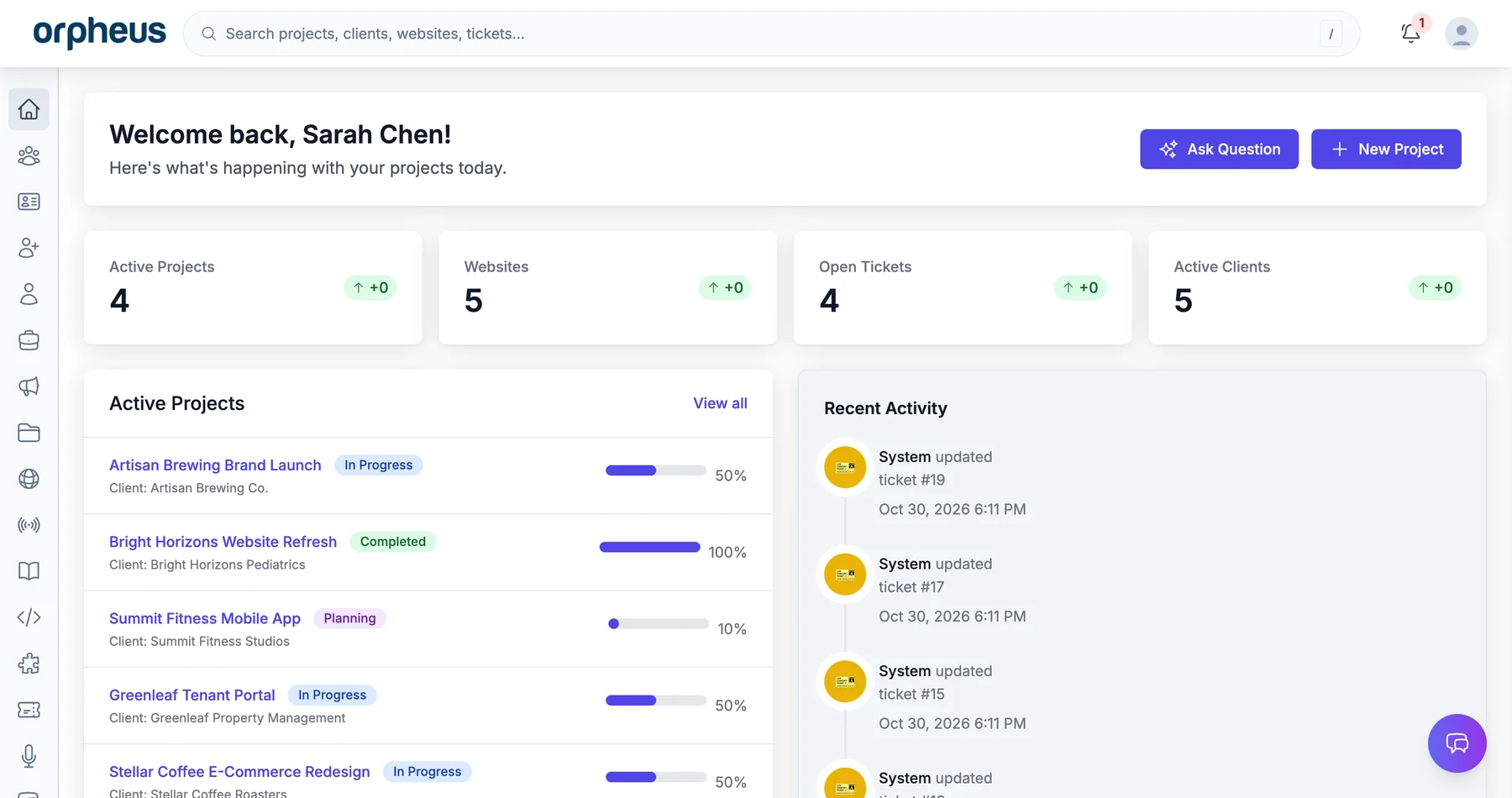 Synthetic demo tenant · No client data
As client work expanded across email, repositories, hosting records, and support tools, Orpheus built its own platform to keep the work connected. The result is a multi-tenant web application that links operational records with AI tools and human review.
Orpheus Dashboard is the operating layer behind our client work. It brings client relationships, project delivery, support, websites, repositories, and shared records into one workspace, so the team can move from a request to a reviewed action without losing context.
The product is also where we test a practical model for AI-assisted service delivery. AI can gather context, classify work, and prepare a plan. A person reviews the proposed action and its evidence before any consequential tool call or client-facing step.
Client work was connected in practice, but scattered across tools
A support request can touch a client relationship, an active project, a website, a repository, and a conversation. When those records live in separate tools, the team spends time reconstructing context before it can safely act.
Orpheus Dashboard creates a shared operational model for that work. Each record can stay connected to the client, project, people, systems, and history that give it meaning.
Clients and projects stay connected
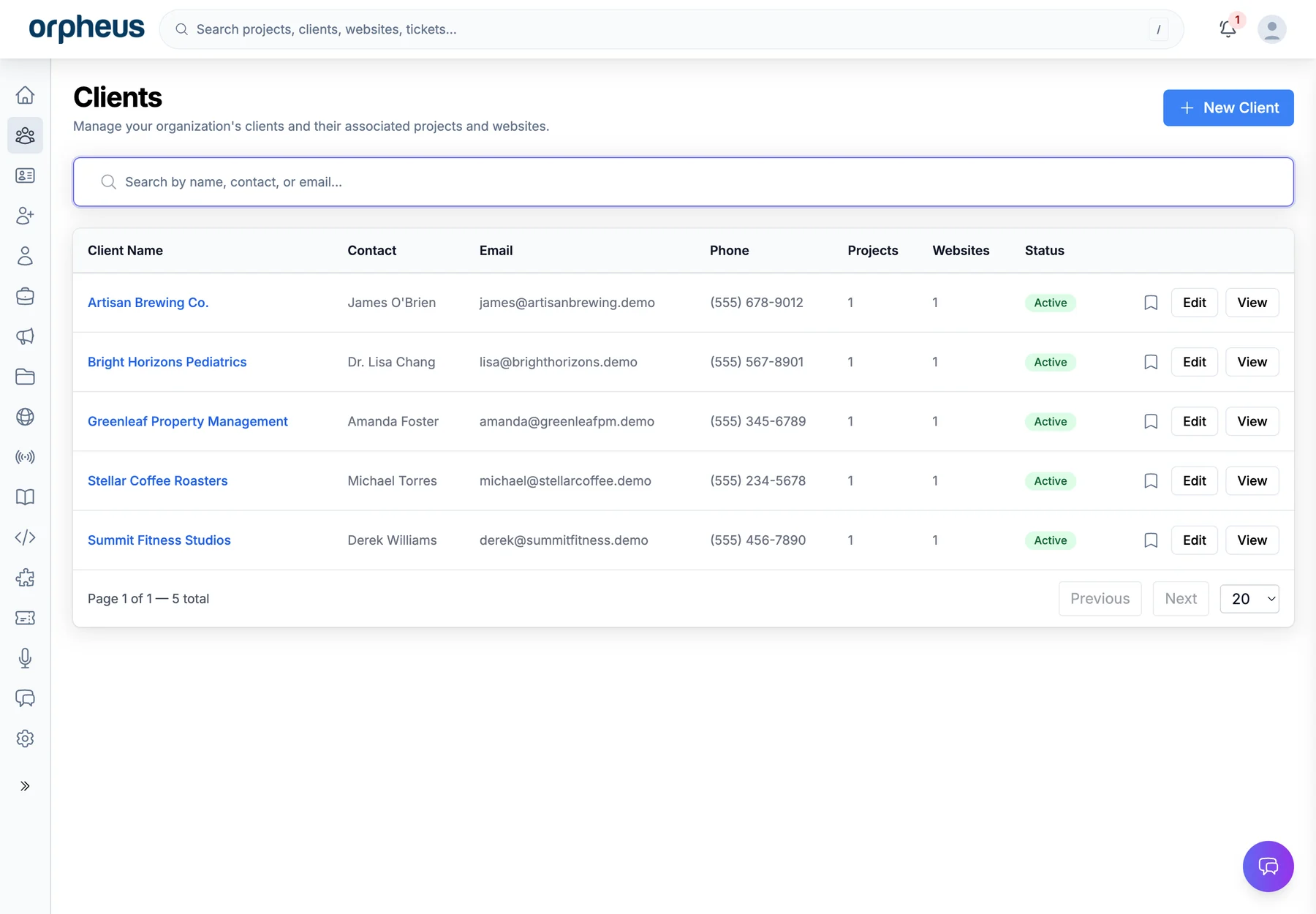
Client records connect contacts, projects, support tickets, websites, recurring services, and portal settings. The team can see the state of the relationship without treating each system as a separate source of truth.
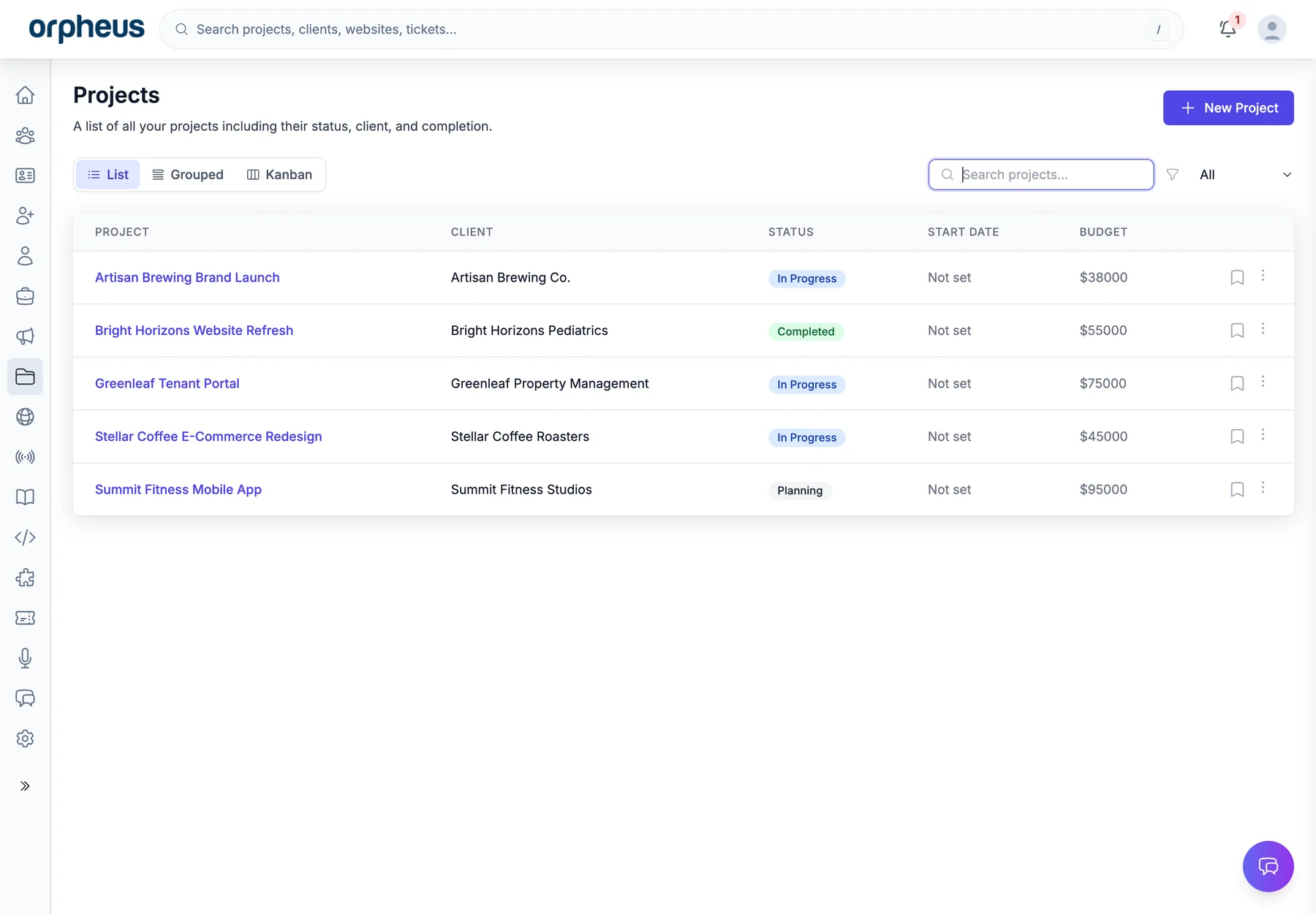
The project layer adds delivery status, ownership, phases, tasks, team members, and related websites. The views below come from the running application with an isolated synthetic demo tenant.
Context first, then a reviewed action path
Incoming email can become a ticket with the message, attachments, client, project, and website context kept together. The system includes deduplication and classification so repeated messages do not silently create parallel work.
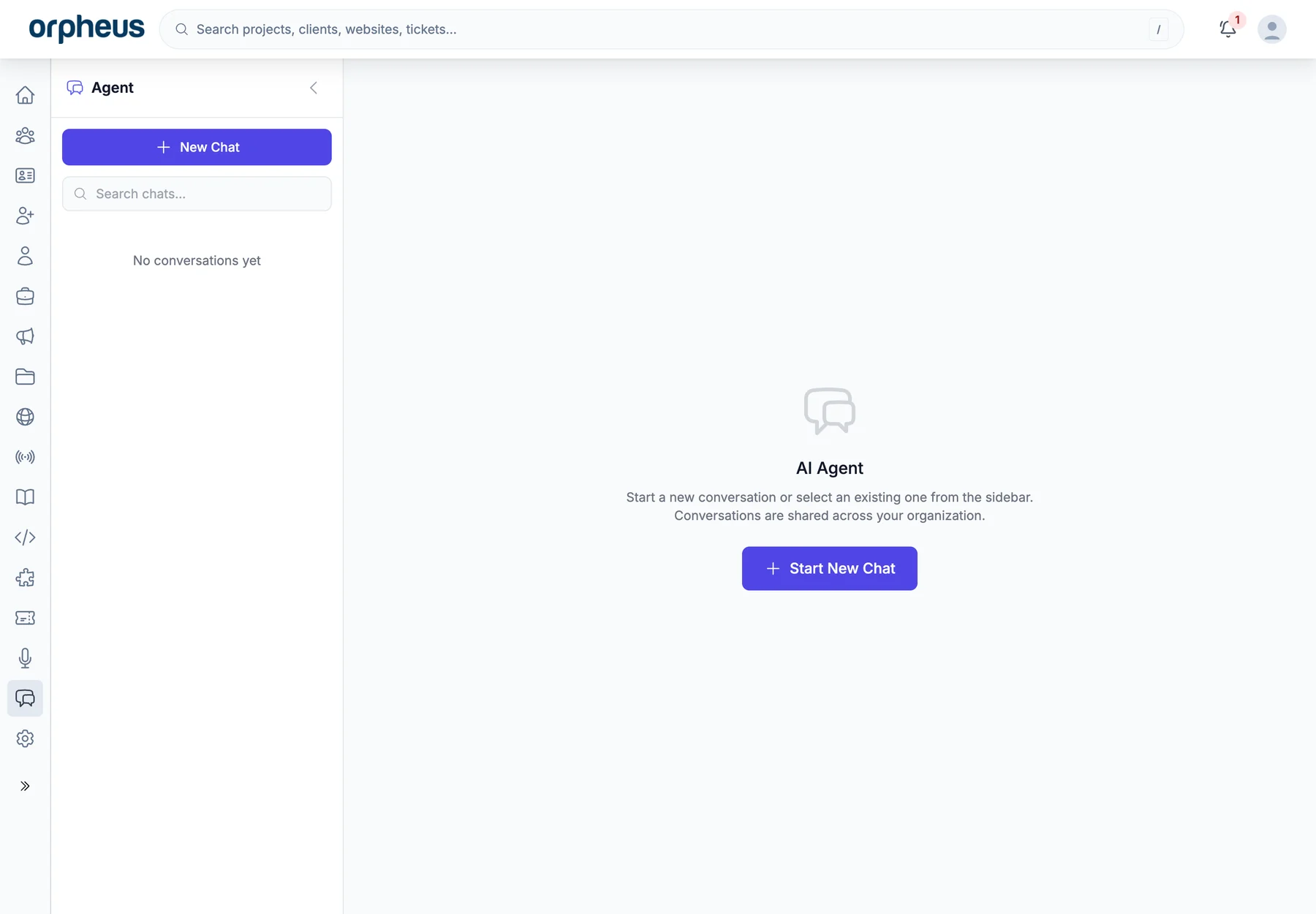
From the ticket, an AI workbench can gather connected records and prepare an action plan. Tool approvals, tenant-scoped integrations, and audit records keep a person in control of consequential steps. The local demo view below shows the workbench before a conversation begins, with no conversation or client content loaded.
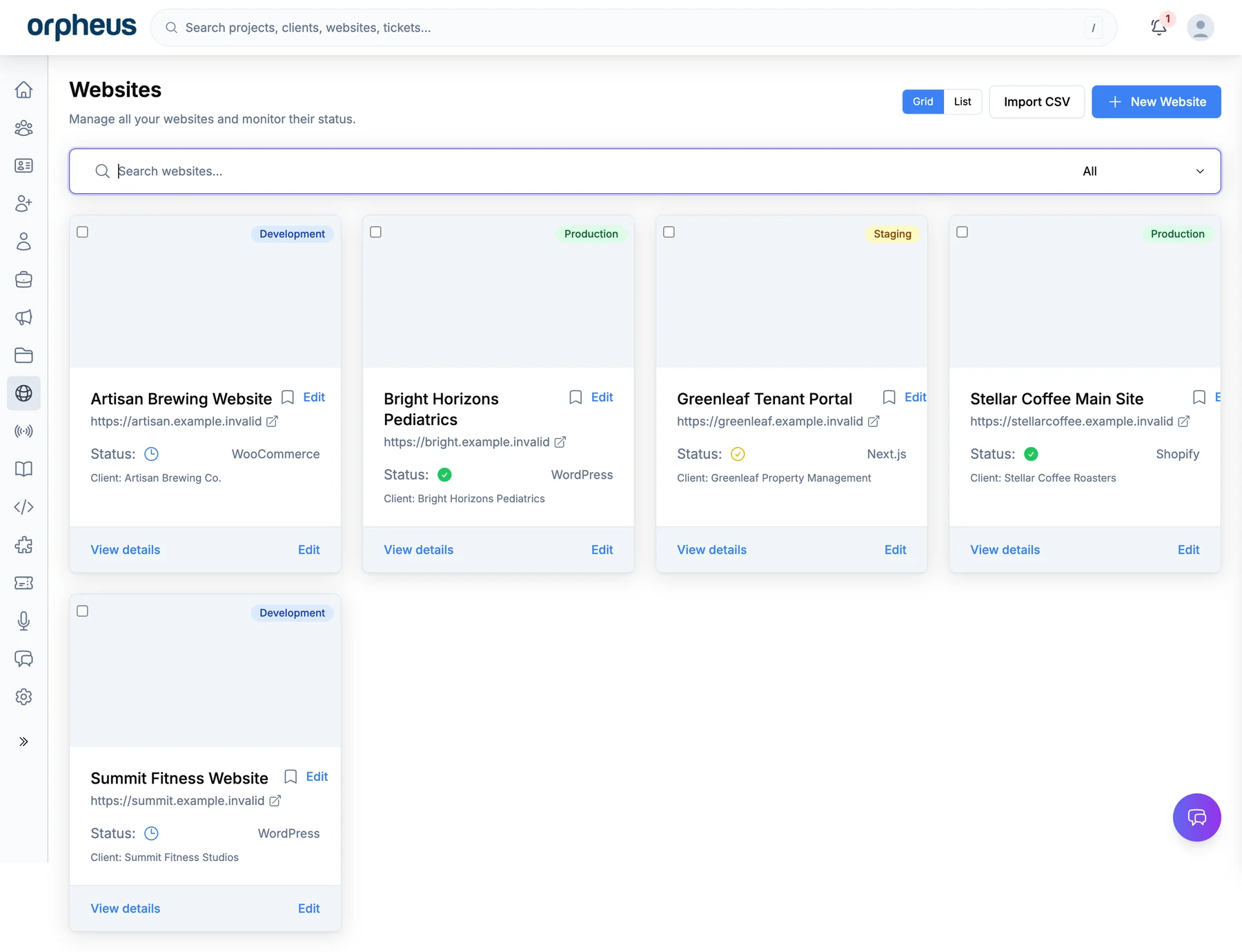
A fleet view for the sites the team supports
Website records connect domains, hosting and account context, support history, and ownership. Monitoring and backup records give the operations team a place to review site health and open work across the fleet.
A WordPress bridge and scoped integration tools let approved workflows operate against the right site without giving every task the same access boundary.
A focused portal built from the same connected records
The client portal exposes the project, ticket, website, and document views appropriate for a client relationship. It uses the same connected records as the team workspace while presenting a narrower experience for shared progress and support.
That shared foundation reduces the gap between the internal state of the work and what a client can see, without exposing the rest of the operations system.
The connected systems behind the workspace
Client workspace
Client, contact, project, ticket, website, and recurring-service records in one relationship view.
Support workflow
Email-to-ticket intake with attachments, deduplication, classification, assignment, and conversation history.
AI workbench
Context gathering, plans, proposed changes, tool approval cards, and audit-aware execution.
Website fleet
Website inventory, monitoring records, backup status, ownership, and WordPress operations.
Scoped integrations
Tenant-aware tools for tickets, projects, clients, websites, repositories, and WordPress.
Client portal
Focused access to shared projects, tickets, websites, and documents from the same operating model.
A first-party platform documented with synthetic data
Every product view in this case comes from the running Orpheus Dashboard application using an isolated, seeded demo tenant, reserved example domains, invented companies, and fictional records. The captures show the working product without publishing client data, credentials, production connections, internal URLs, or performance claims.
The case describes capabilities present in the product and repository. It does not claim unsupported productivity gains or portray the system as running consequential work without human review.
Let's build something
worth shipping.
A short conversation about your goals, what's in the way, whether Orpheus is a fit, and a sensible next step.